
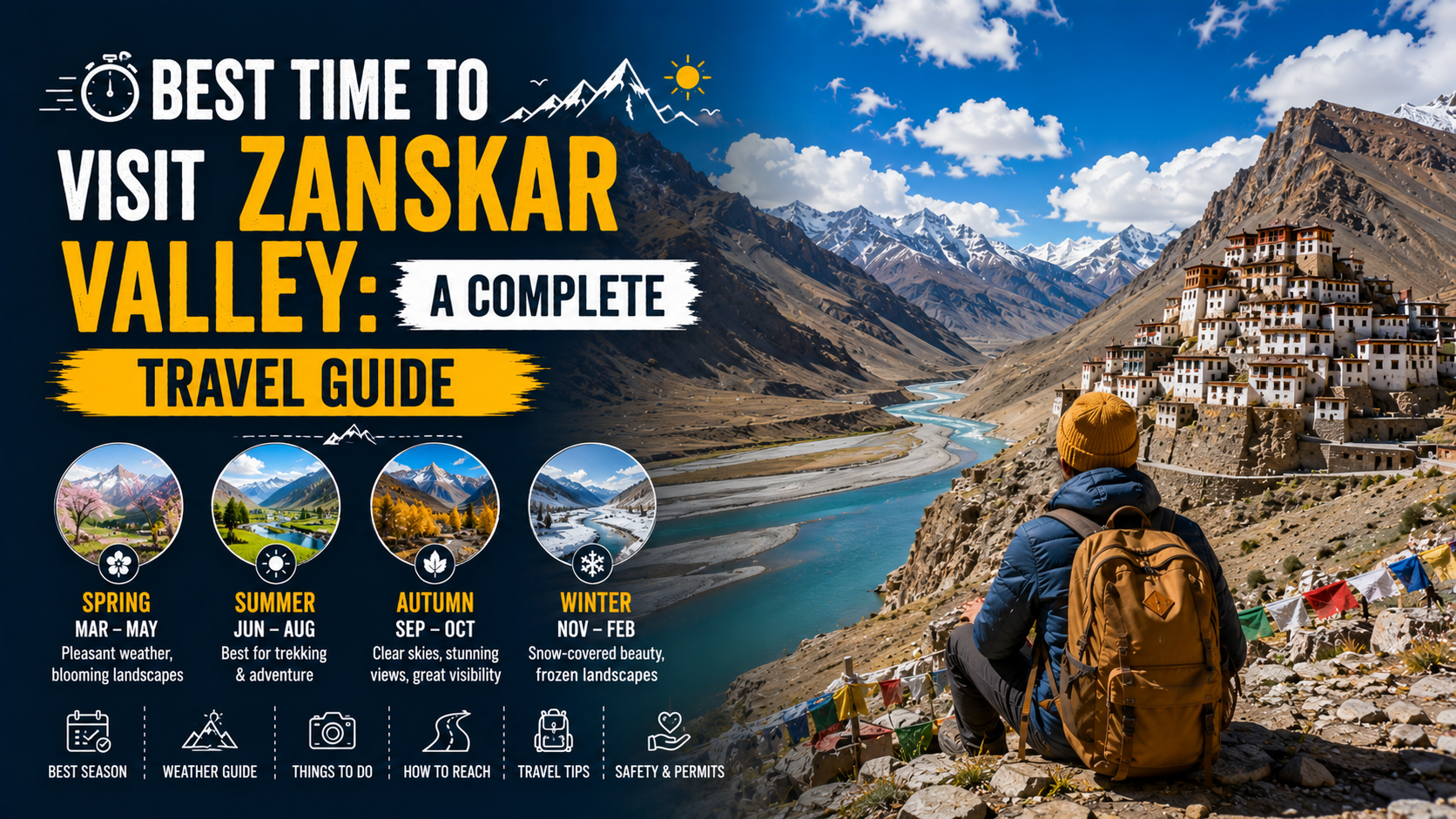
Zanskar Valley is one of Ladakh's most untouched and beautiful places, and visiting at the right time greatly enhances your experience. The valley changes dramatically with the seasons: in the summer, the roads are open for scenic drives, monastery visits, and village exploration, while in the winter, the frozen Zanskar River forms the legendary Chadar Trek.
IIf you want to know the best time to visit Zanskar Valley, the answer is simple, but it depends on the type of trip you want, such as a road trip, a bike trip, a cultural vacation, or a winter adventure. Most tourists prefer June to September because the weather is more stable, the roads are open, and the valley is easily accessible by car.
For adventurers, the Chadar Trek is best experienced between January and February, when the river freezes into a sheet of ice and the landscape transforms into a completely different world. This guide breaks down the weather by month, allowing you to plan the ideal trip for your travel style.
Why timing matters in Zanskar

Zanskar is not like a typical hill station that you can visit all year without much planning. It is a high-altitude Himalayan valley with harsh weather, long travel distances, and roads that can be closed for months due to snowfall. The experience you have in June is very different from what you will see in January.
That is why it is critical to understand the climate before making a booking. Summer and early autumn are ideal for sightseeing, photography, visiting monasteries, or taking a leisurely drive. Winter is the best time to go on a frozen river trek. The same destination provides two entirely different experiences depending on the month.
Zanskar Weather by Season
Zanskar’s weather is best understood in two broad travel seasons: summer travel and winter travel.
The summer season usually begins around late May or June and continues until September, when the valley remains relatively open and accessible. During this time, daytime weather is generally mild and pleasant, though nights can still be cold because of the altitude.
In contrast, winter begins around November and lasts until March or April. During these months, temperatures drop sharply, snow becomes heavy, and road travel becomes difficult or impossible in many parts of the valley. This is also the season when the famous frozen river trek becomes possible. So when you plan a visit, think not only about the month but also about the type of experience you want.
June: The Season Opens

June is one of the most interesting months for a trip to Zanskar. It is often the point when the valley becomes more accessible after the long winter closure, and travellers can start planning road journeys again. This is a great month for people who want to enjoy the valley before the peak summer rush begins.
The roads may still have rough patches in some stretches, but June gives you the advantage of fresh mountain scenery, melting snow, and relatively fewer crowds than the later summer months. If you are planning a Zanskar Valley trip from Delhi, June is one of the first practical windows for a road journey. It is also a good time for travellers who want a balance of adventure and comfort.
July: Full Summer Travel
July is one of the most ideal months for a Zanskar Valley road trip. By this point, the roads are usually more stable, the weather is warmer during the day, and the majority of the main attractions are easier to reach. Monasteries, villages, mountain passes, and river viewpoints can all be visited without the harsh restrictions of winter.
This month is also popular among families, bikers, and long-distance road travelers. If you're planning a Zanskar Valley tour itinerary, July provides one of the most consistent combinations of accessibility and scenic beauty. The valley feels alive, but it also retains its remote and untouched feel.
August: Peak Travel Comfort
August is another great month to visit Zanskar. The weather remains pleasant for road trips, sightseeing, and village stays, and the valley is usually completely open to visitors. For many people, this is the most comfortable time to travel because the roads are navigable, the scenery is breathtaking, and the weather is generally pleasant.
This month is ideal for those planning a longer vacation rather than a quick visit. If your trip includes monastery exploration, camping, photography, or a leisurely road trip, August is an excellent choice. It is also a good month to plan a well-paced Zanskar Valley trip itinerary from Delhi, especially if you want to avoid weather-related surprises.
September: the Most Scenic Shoulder Month
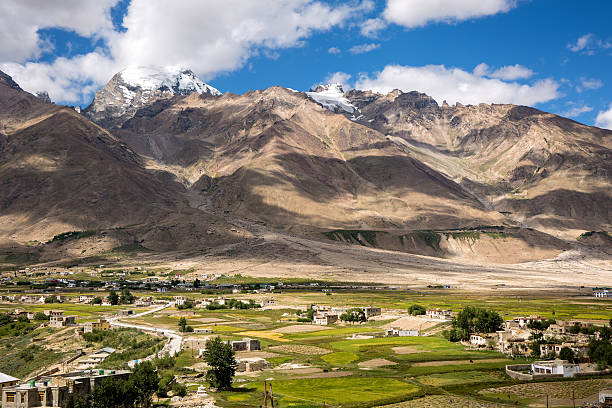
September is often regarded as one of the most beautiful months in Zanskar. The weather begins to cool, the tourist rush subsides, and the valley begins to show signs of autumn color. This is a particularly rewarding time for travelers who prefer quieter roads and softer lighting for photography.
This month is particularly appealing for those looking for scenic mountain drives without the crowds that come with peak season. If you prefer a more peaceful road trip, September is a better option than July or August. It is also an excellent choice for anyone looking for the best time to visit Zanskar Valley in terms of both accessibility and atmosphere.
October: Closing Window
October marks the beginning of the end of Zanskar's travel season. Some journeys may still be possible in early October, but conditions become more unpredictable as temperatures drop and snow returns to the higher regions. Many travelers avoid this month because the likelihood of weather-related disruption increases.
However, if you are an experienced mountain traveler who doesn't mind colder weather, early October can still provide beautiful views and fewer crowds. Beyond the first half of the month, however, the valley begins to transition into winter mode. Unless they intentionally seek a quiet shoulder-season experience, most visitors will find this to be an unsuitable month.
November to December: Winter Begins
By November and December, Zanskar becomes significantly colder and more difficult to travel through. Summer roads may become congested, and many regular sightseeing plans may no longer work as well as they did in the warmer months. This is the time when the valley transitions into deep winter.
Although this may not be the best time for a typical vacation, it is an important transitional period for winter travelers. The scenery becomes harsh and beautiful, but access becomes more difficult. If you want to take a relaxing road trip or go sightseeing, now is not the time. If you want to see the frozen Himalayas, winter has arrived.
January to February: Chadar Trek Season

For adventure travelers, January and February are the most important months. The famous Chadar Trek is only possible during this season because the Zanskar River freezes. The trek is one of the most extraordinary winter adventures in India, and it is the primary reason people visit Zanskar during the coldest months of the year.
If you want to go on the Chadar Trek, now is the time to do it. The river becomes a frozen "chadar," or sheet of ice, and the trek route transforms into a dramatic trail through ice, gorges, and snow-covered cliffs. This season is not for casual travelers, but for trekkers and expedition enthusiasts, it is the highlight of the year.
March and April: Transition Months
March and April are transitional months in Zanskar. Winter begins to loosen its grip, but the area is not yet fully prepared for normal travel. Some areas may remain inaccessible, and weather conditions can still be unpredictable. This is one of the least predictable times to plan a standard trip.
If you're looking for a Zanskar Valley trip package, most operators don't recommend March or April for regular sightseeing. They may be useful for certain types of adventures, but for the majority of travelers, the risk outweighs the benefit. It is better to wait until the valley opens up more fully in the summer.
May: Pre-season movement
May can be a promising month in some years, but it remains a pre-season period. Depending on snowfall and road conditions, parts of the route may reopen, but the valley is not yet fully operational. Some travellers use May as a scouting month or to get an early start on their Himalayan itinerary.
For the majority of visitors, June remains safer and more practical. May can be incorporated into travel plans, but only with flexibility. If you want to have a more enjoyable Zanskar Valley road trip, you should probably wait a few weeks.
Best Season to Visit Zanskar Valley
The best time to visit is also determined by whether you want to go on a road trip, bike ride, or trek. A Zanskar Valley road trip is best done during the summer, when roads on the accessible side are open and travel is manageable. This is the time to enjoy the passes, monasteries, villages, and natural landscapes with minimal disruption.
A winter trek, on the other hand, necessitates a very different mindset. The Chadar route is famous for its extreme and unusual nature. Summer is ideal for those seeking comfort, variety, and a diverse range of experiences. If you're looking for a once-in-a-lifetime adventure, winter has its own appeal.
Most travelers prefer to visit Zanskar Valley between June and September, with July, August, and September providing the best combination of weather, accessibility, and scenery. If you want the traditional Zanskar experience — roads, monasteries, villages, glacier views, and peaceful mountain landscapes — this is the season to go.
If you're planning a Chadar Trek, the best and most important time to go is from January to February. Each season reveals a different side of the valley, so the best month depends on the type of journey you desire.
With Travelvichar, you can unleash your inner adventurer and explore the untouched beauty of Zanskar Valley.
